
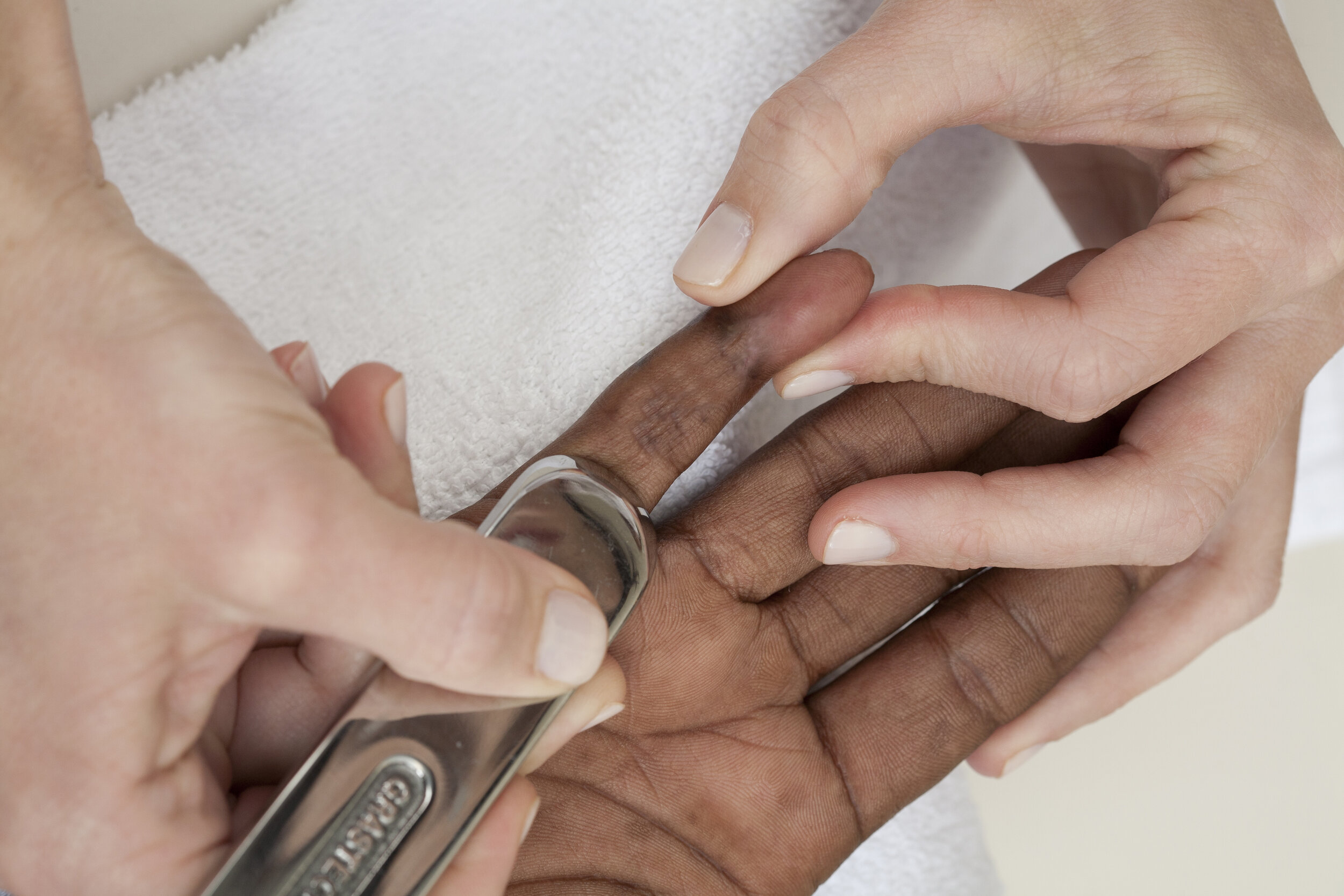
Graston Technique
Graston Technique is an innovative, patented form of instrument assisted soft tissue mobilization that enables clinicians to effectively break down scar tissue and fascial restrictions. The technique utilizes specially designed stainless-steel instruments to specifically detect and effectively treat areas exhibiting soft tissue fibrosis of chronic inflammation.
Benefits of the Graston Technique Can Include:
Quicker recovery time — This therapy treatment can help decrease your recovery time. Breaking up scar tissue or tension knots in your soft tissue can help promote blood flow. Improved blood flow can help promote quicker healing, increased range of motion and decreased pain.
Pain relief — The instruments of this specific therapy treatment break up scar tissue or knots in the soft tissue, which can reduce pain and stiffness.
Medication reduction — By helping to reduce inflammation and pain, this therapy technique can lessen the need for pain or anti-inflammatory medications.
Improved chronic conditions — Conditions previously thought to be chronic have been helped or resolved with treatment by this treatment.
Noninvasive treatment — Some conditions that might require surgery to help correct can benefit and improve with this therapy treatment. This makes it a noninvasive, less risky treatment option.
Cost-effectiveness — Improving recovery time, fewer treatments needed and pain relief lead to lower costs for injuries and conditions that respond to this specific treatment.
What Conditions can be Treated with the Graston Technique?
The Graston Technique can help treat soft tissue acute or chronic conditions such as:
Post-surgical scar tissue (once healed)
Rotator cuff tendinitis
Knee pain
Tennis or golfer’s elbow
Fibromyalgia
Neck pain
Back pain
Plantar fasciitis
Carpal tunnel syndrome
Achilles tendinitis
Women’s health (C-section or post-mastectomy scarring )
IT band issues
Hamstring injuries
Trigger finger